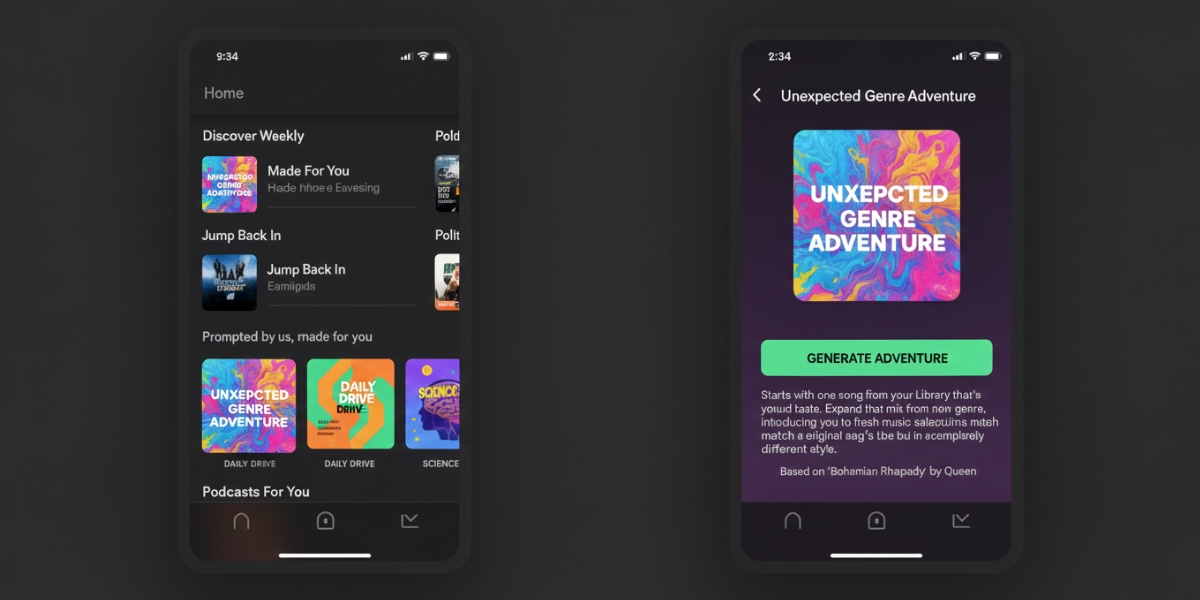
Spotify AI Playlists 2025: Complete Guide to Prompted Playlists Premium Feature
Tired of manually creating playlists that never quite capture the perfect vibe? Spotify just launched Prompted Playlists on December 11, 2025, exclusively for Premium subscribers in New Zealand , marking a revolutionary shift in how we interact with music streaming algorithms.
This groundbreaking feature transforms your Spotify Premium experience by letting you control the algorithm with natural language commands. Instead of passively accepting algorithmic recommendations, you can now actively steer your music discovery using detailed, conversational prompts that tap into your entire listening history.
Whether you're planning a workout playlist that transitions from high-energy tracks to cool-down songs or searching for deep cuts from your favorite artists, Spotify AI playlists powered by advanced language models deliver unprecedented personalization. Here's everything Premium subscribers need to know about this game-changing feature.
What Are Spotify AI Prompted Playlists and How Do They Work?
Prompted Playlists represent the first feature that puts control of the algorithm directly in users' hands , according to Gustav Söderström, Spotify's Co-President and CTO. Unlike traditional algorithmic curation that passively learns from your behavior, this AI-powered tool actively responds to explicit instructions.
The technology leverages advanced large language models (LLMs) enhanced with "world knowledge" capabilities. This means the AI understands not just musical concepts but also cultural references, activities, and contextual requests. The system analyzes your entire Spotify listening history from day one , creating playlists that reflect the full arc of your musical identity rather than just recent preferences.
Key Features That Make Prompted Playlists Different
- Natural Language Commands: Write detailed, multi-part prompts like 'high-energy pop and hip-hop for a 30-minute 5K run that keeps a steady pace before easing into relaxing songs for a cool-down'
- Complete History Access: Unlike Discover Weekly which focuses on recent activity, this feature mines your entire listening archive to surface forgotten favorites and deep cuts
- Scheduled Refresh Options: Set playlists to update daily or weekly, creating your own personalized version of flagship features like Discover Weekly
- Transparent Recommendations: Each song includes descriptions explaining why the AI selected it, demystifying the algorithm's decision-making process
- Continuous Refinement: Edit your prompt anytime to fine-tune results without starting from scratch
Spotify Premium Features: Why Prompted Playlists Matter in 2025
With 713 million listeners, 90% of whom say Spotify is essential to their day , the streaming giant faces intense pressure to differentiate its Premium offering. Prompted Playlists directly address this challenge by creating exclusive value that free users cannot access.
The strategic positioning as a Premium-only feature strengthens subscription value in several ways. It provides tangible utility beyond ad-free listening, creates a competitive moat against rivals like YouTube Music and Apple Music, and leverages Spotify's proprietary listening data as a unique advantage competitors cannot replicate.
How Prompted Playlists Compare to Existing Spotify AI Features
| Feature | Input Method | History Depth | Update Frequency | Transparency |
|---|---|---|---|---|
| Discover Weekly | Implicit behavior | Recent activity | Weekly (fixed) | Low |
| AI Playlist (2024) | Short prompts | Recent + genre | Manual refresh | Minimal |
| Prompted Playlists | Long natural language | Full history | Daily/weekly | High (explanations) |
Creating Perfect Playlists: Prompt Engineering Tips
Success with Spotify AI playlists depends on crafting effective prompts. The feature factors in world knowledge , enabling sophisticated requests that blend multiple criteria.
Examples of Powerful Prompt Structures
Historical Discovery: "Music from my top artists from the last five years" then amend with "deep cuts I haven't heard yet" activates catalog tracks while maintaining personal relevance.
Activity-Based Curation: Specify tempo, duration, and mood transitions like "upbeat indie rock for morning productivity that shifts to ambient electronic for focused afternoon work."
Cultural Context: Request "music from this year's biggest films and most-talked-about TV shows that match my taste" to discover soundtrack material aligned with your preferences.
- Be Specific: Include genres, moods, activities, and timeframes for precise results
- Use Transitions: Describe how energy or tempo should evolve throughout the playlist
- Reference Context: Mention activities, seasons, or cultural moments the AI can interpret
- Iterate Freely: Refine prompts based on the explanations provided for each track
The Technology Behind Spotify's AI Innovation
Spotify's implementation goes beyond simply applying a generic AI model. The company has developed proprietary "Semantic IDs" that transform millions of catalog entities into specialized tokens combining textual descriptions with behavioral co-listening patterns.
This architecture teaches the LLM to "speak Spotify's language," understanding nuanced distinctions like what makes a track a "deep cut" versus a mainstream hit for specific users. The system processes not just what music is, but how listeners engage with it across different contexts.
The infrastructure must handle significant computational demands, including real-time querying of years of listening data, generating personalized recommendations across hundreds of millions of tracks, and producing explainable AI outputs that transparently justify each selection.
Competitive Landscape: Spotify vs. YouTube Music vs. Apple Music
The streaming wars increasingly center on AI-powered personalization as music catalogs become largely identical through licensing agreements. Each platform approaches algorithmic control differently.
YouTube Music leverages Google's Gemini for its "Ask Music" feature, excelling in culturally quirky insights and video integration. However, it lacks the scheduled refresh capability and full history depth that Prompted Playlists offer.
Apple Music maintains a more conservative approach, emphasizing editorial curation over user-directed AI. While this delivers high-quality mixes, it provides less listener agency than Spotify's explicit prompt-based system.
For more AI-powered tools enhancing your digital experience, explore our comprehensive AI tools directory featuring the latest innovations across categories.
Frequently Asked Questions
Is Spotify Prompted Playlists available to all Premium subscribers?
Currently, the feature is in beta testing exclusively for Spotify Premium subscribers in New Zealand starting December 11, 2025. The feature operates only in English during this initial phase, with global expansion expected after Spotify gathers feedback and stabilizes performance.
How does Prompted Playlists differ from the original AI Playlist feature?
Prompted Playlists supports much longer, more complex natural language instructions thanks to world knowledge integration. It accesses your complete listening history rather than just recent activity, includes scheduled automatic refreshes (daily or weekly), and provides transparent explanations for each song selection.
Can I create multiple Prompted Playlists for different activities?
Yes, you can generate unlimited Prompted Playlists tailored to various contexts like workouts, studying, commuting, or social gatherings. Each playlist maintains its own prompt and refresh schedule, functioning as a personalized algorithmic mix customized to your exact specifications.
Do Prompted Playlists work offline?
Once created, you can download Prompted Playlists for offline listening like any other Spotify playlist. However, generating new playlists or refreshing existing ones requires an internet connection to access the AI processing and your cloud-stored listening history.
Conclusion: The Future of AI-Powered Music Discovery
Spotify AI Prompted Playlists represent a fundamental shift in streaming platform design—from systems that learn passively to interfaces that respond actively to explicit user commands. By combining advanced language models with proprietary listening data, Spotify has created a feature that genuinely enhances Premium subscription value.
For Premium subscribers eager to maximize their investment, mastering prompt engineering unlocks unprecedented control over music discovery. The ability to mine your entire listening history, set automatic refreshes, and understand algorithmic reasoning transforms Spotify from a passive player into an intelligent musical companion.
As artificial intelligence continues reshaping digital experiences, features like Prompted Playlists demonstrate how thoughtful implementation can empower users rather than simply automate processes. Stay updated on the latest Spotify Premium features and AI innovations by bookmarking this guide for future updates.