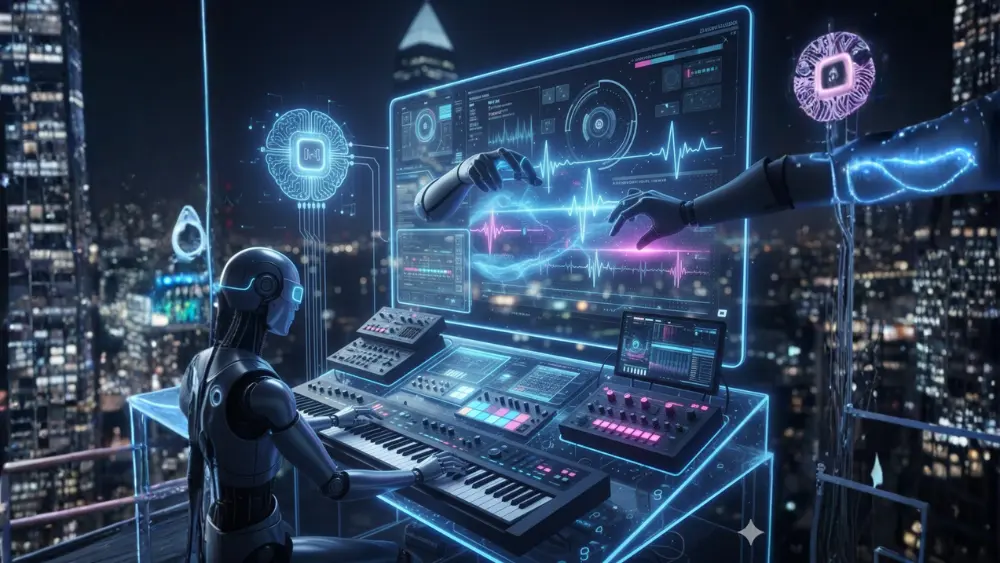
AI Music Tools: Revolutionizing Music Creation with Artificial Intelligence
Introduction
The world of music production is rapidly evolving, and AI music tools are at the forefront of this transformation. These innovative platforms empower musicians, producers, and even beginners to create, edit, and enhance music using artificial intelligence. Whether you are producing a beat, composing a film score, or experimenting with melodies, AI music generators make professional-quality music accessible in minutes.
What Are AI Music Tools?
AI music tools are digital platforms powered by artificial intelligence and machine learning that analyze music patterns in melody, rhythm, harmony, and structure. Unlike traditional digital audio workstations, which require manual input for every note, AI music tools automate portions of the creative process, generating loops, ideas, or complete tracks that users can refine. They are especially valuable for content creators, game developers, and anyone who needs high-quality, royalty-free music quickly.
How Do AI Music Tools Work?
AI music tools rely on machine learning algorithms trained on thousands of audio samples. They learn musical structures, chord progressions, rhythms, and harmonies. The process typically includes:
- Input: Select mood, genre, instruments, or tempo.
- Generation: AI composes music based on input parameters using neural networks.
- Refinement: Users can edit, rearrange, or remix tracks.
- Export: Save in MP3, WAV, or other standard formats for production or content creation.
Types of AI Music Tools
AI music tools cover a range of functionalities:
| Type | Purpose | Examples of Use |
|---|---|---|
| AI Music Generators | Create new compositions or beats automatically | Background scores, YouTube videos, podcasts |
| AI Mixing and Mastering Tools | Balance audio levels, apply effects, polish tracks | Professional music production, mastering |
| AI Voice and Lyrics Tools | Generate lyrics or synthetic vocals | Songwriting, virtual artists |
| AI Sound Design Tools | Produce custom sound effects or instruments | Game development, film soundtracks |
| AI Music Analysis Tools | Identify tempo, chords, key signatures | DJing, remixing, learning music |
Top AI Music Tools in 2025
AIVA (Artificial Intelligence Virtual Artist)
AIVA allows composers to create emotional soundtracks in various genres, from classical to cinematic. Users can edit, rearrange, and export royalty-free compositions for commercial projects.
Soundraw
Soundraw generates multiple music tracks based on mood, genre, and length. Ideal for content creators needing personalized, copyright-free background music quickly.
Boomy
Boomy enables instant song creation with monetization options and AI-assisted mastering, making music production accessible to beginners.
Mubert
Mubert provides real-time, generative music streams and developer API access for integration into apps, games, and videos.
LANDR
LANDR automates mastering and mixing, ensuring professional-quality sound, with collaboration and distribution features for musicians.
The Role of OpenAI in AI Music
OpenAI's generative models, like MuseNet, have influenced AI music creation by composing multi-instrumental tracks across genres. These advancements inspire new tools that integrate AI-driven music production into creative workflows. For further guidance on using OpenAI tools in creative workflows, see this step-by-step guide.
Why AI Music Tools Are Transforming the Industry
- Speed: Produce full-length tracks in minutes instead of hours.
- Accessibility: No advanced music theory or expensive software required.
- Customization: Tailor music for videos, advertisements, or branding.
- Cost-Effective: Save on studio production and licensing fees.
- Creative Inspiration: Generate new melodies and chord progressions effortlessly.
Many of these AI music tools are also being integrated into immersive environments like XR platforms.
The Future of AI Music Creation
Expect deeper collaboration between human artists and AI, real-time adaptive music for XR experiences, advanced emotional mapping in compositions, and new sounds that push beyond traditional instruments.
Conclusion
AI music tools like AIVA, Soundraw, Boomy, Mubert, and LANDR are reshaping music creation. By combining human creativity with machine intelligence, these tools make professional-quality music more accessible and inspire new possibilities in sound design, composition, and production.